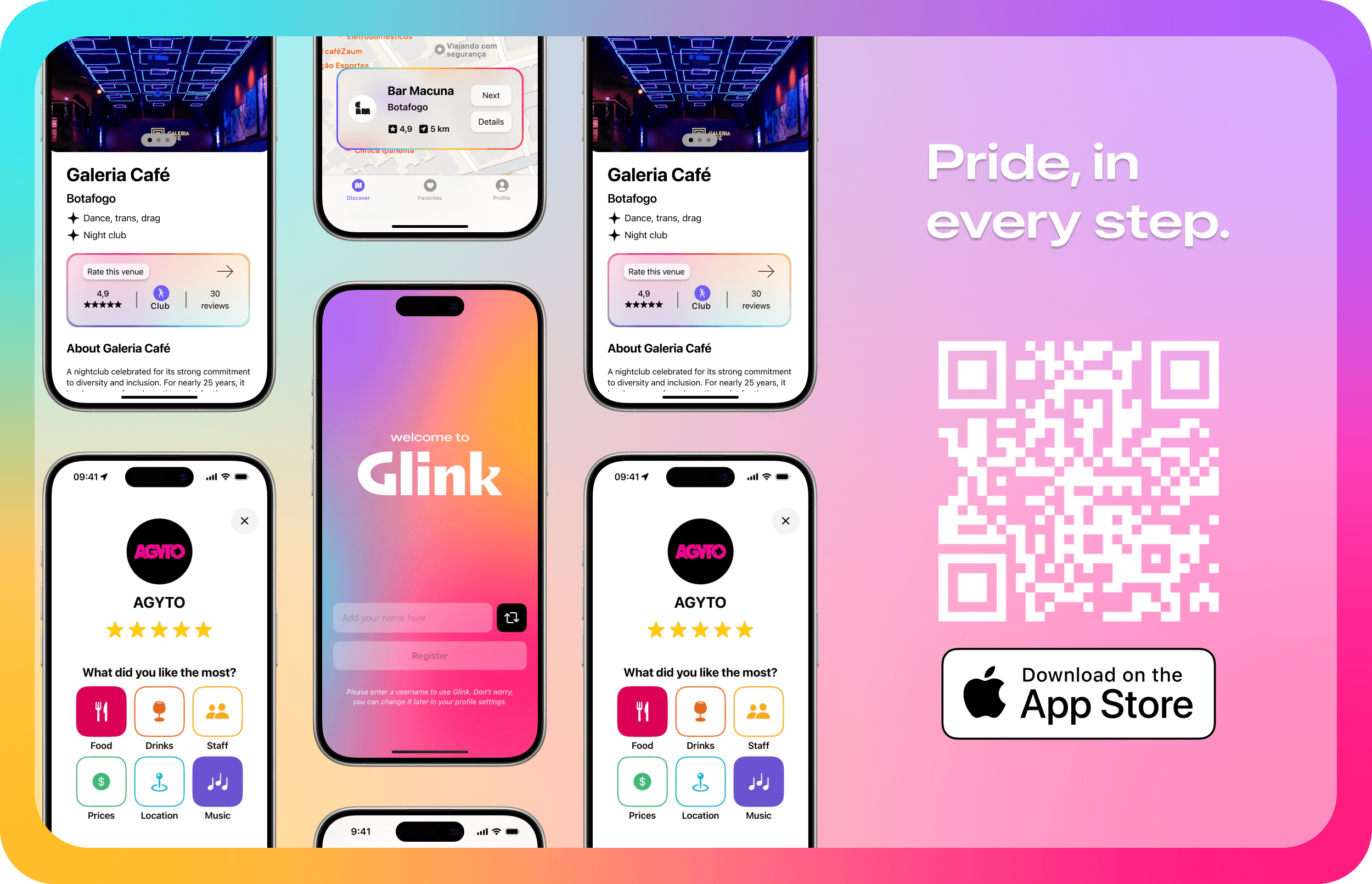
Glink
Glink was designed to empower both locals and tourists to navigate Rio with confidence, celebrating diversity while promoting social inclusion through accessible design and meaningful interactions.
UX Research
UI Design
Design System

Project Overview
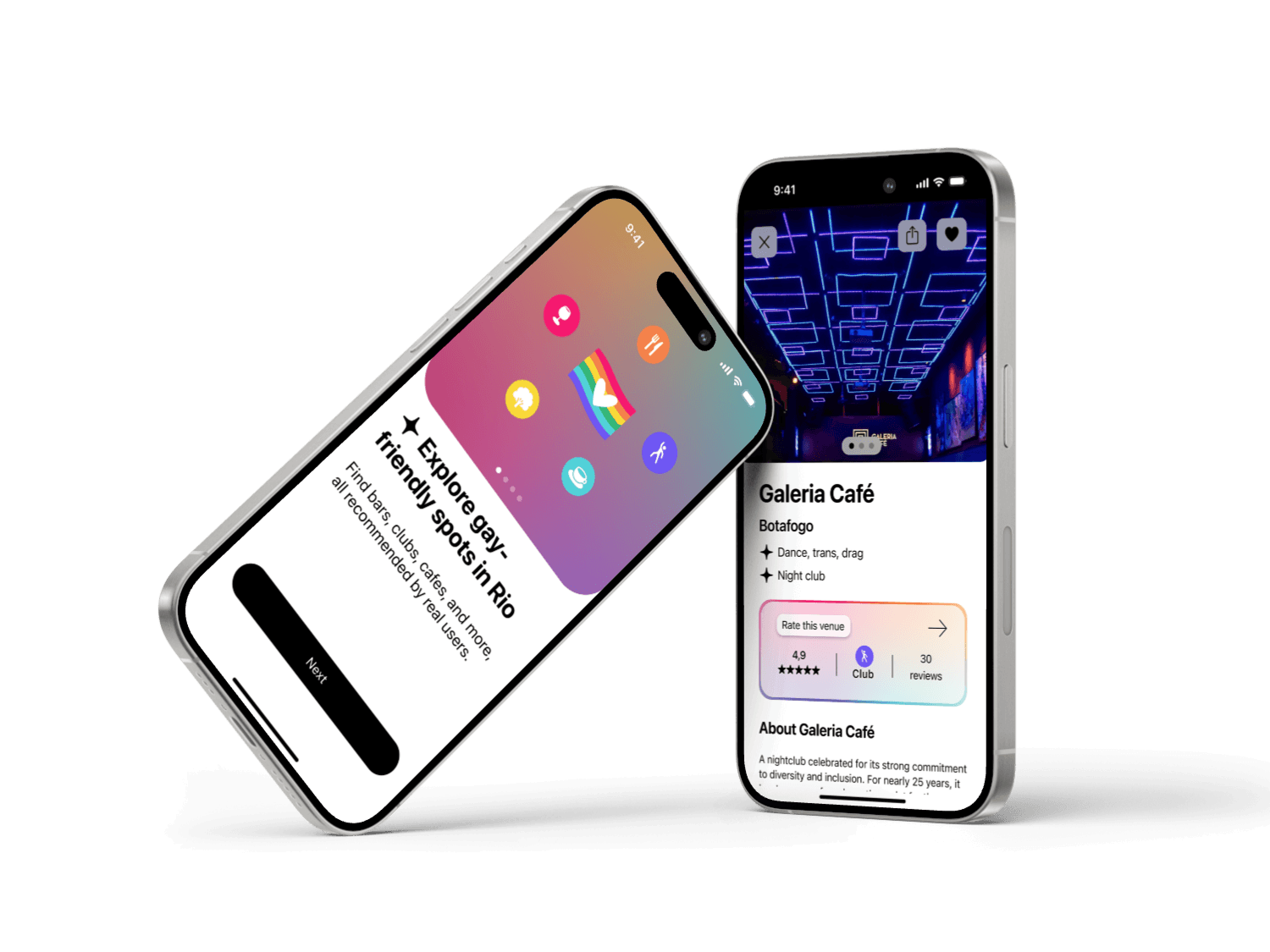
Glink is a mobile app designed to help users discover gay-friendly locations in Rio de Janeiro, offering a safe and personalized way to explore inclusive spaces.
Beyond being a city guide, Glink fosters a sense of belonging — allowing users to find places where they can feel comfortable, represented, and free to be themselves.
The app curates bars, restaurants, clubs, and cafés that celebrate diversity and inclusion, helping users make informed decisions about where to go based on community-driven reviews and shared experiences.
My Role
As the UX/UI Designer, I was responsible for:
Conducting early-stage interviews to help define the project’s focus and identify opportunities before narrowing down to the theme of gay-friendly places in Rio.
Participating in the MoSCoW analysis, helping prioritize the app’s core features based on impact and feasibility within the development timeframe.
Leading the wireframing and UI design, creating clean, intuitive layouts and a cohesive visual identity aligned with the app’s inclusive values.
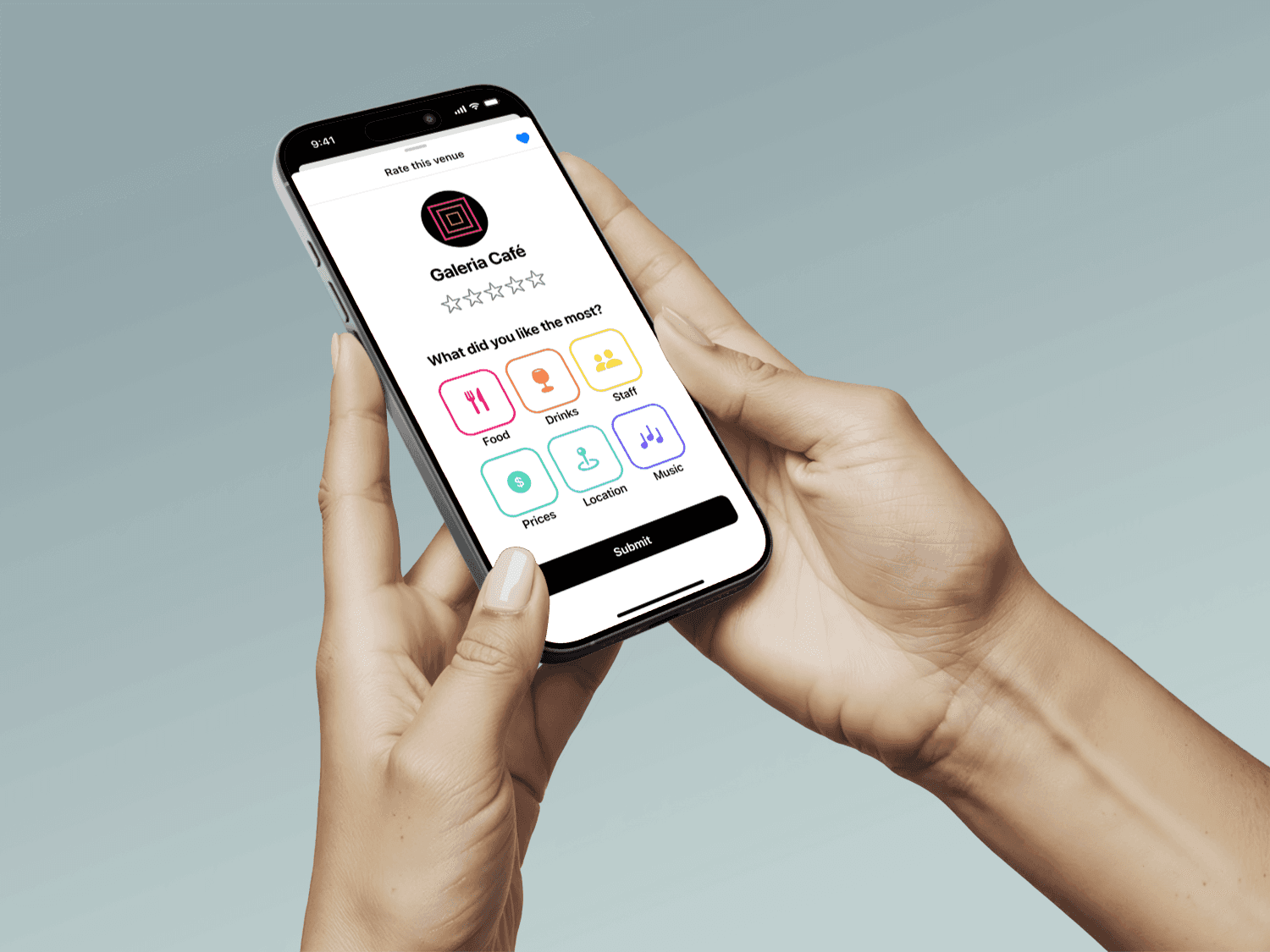
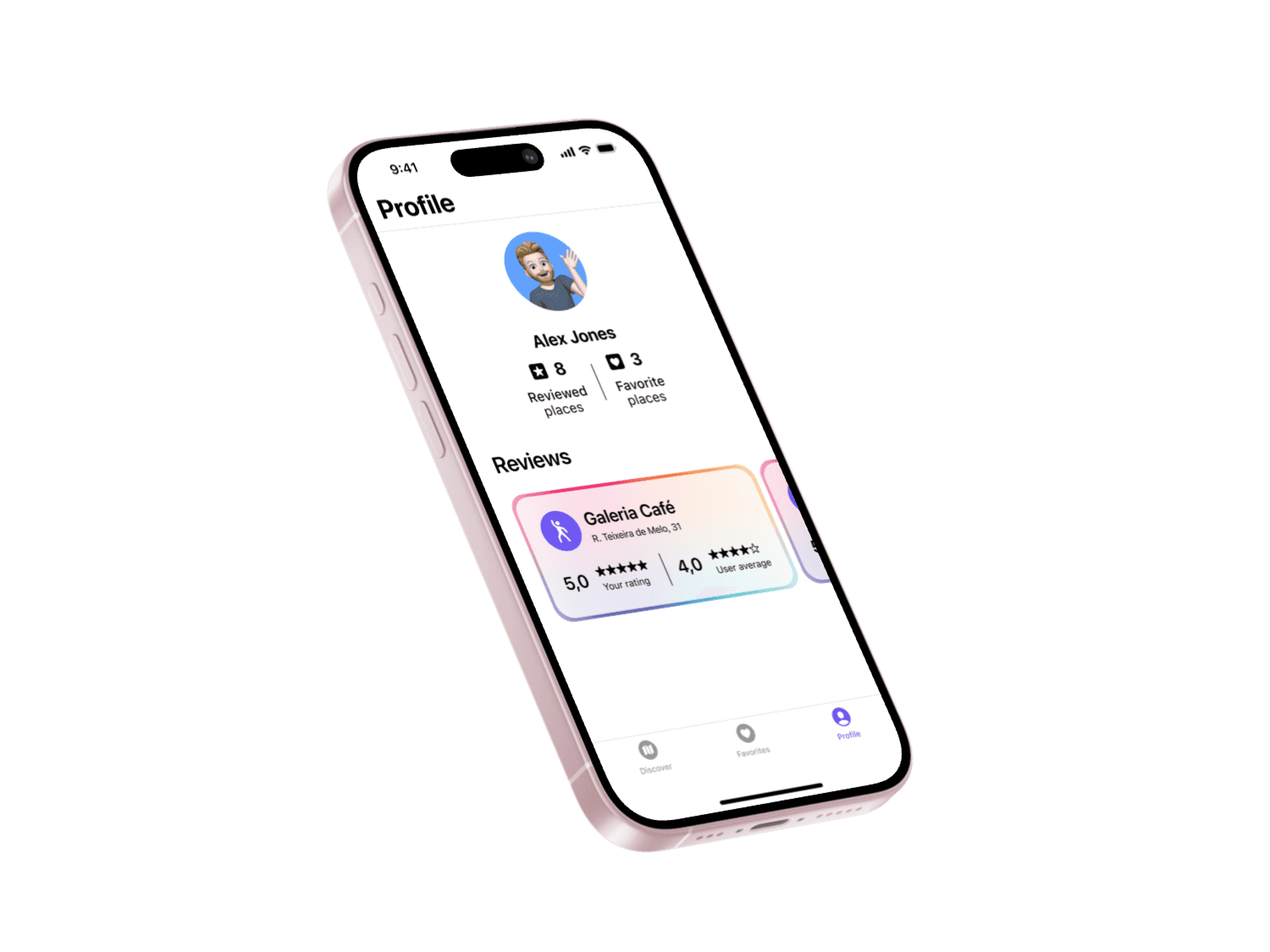
Proposing the review system, allowing users to rate places based on six key aspects — food, drinks, staff, prices, location, and music — making feedback quick, relevant, and engaging. This approach was inspired by benchmarking research and aimed to make the review process faster, simpler, and more meaningful.
Ensuring clarity and cohesion across all visual components, from icons and colors to typography, to create a trustworthy and welcoming interface that reflects diversity.
Problem
For many LGBTQ+ individuals, exploring a new city can come with uncertainty and risk — especially when it’s unclear which spaces are truly inclusive. While there are travel platforms available, few are specifically designed to address the safety and comfort of queer travelers in local contexts.
Opportunity
There was an opportunity to create a city guide centered on trust, safety, and representation. By combining user-generated feedback with curated recommendations, Glink could become a reference for inclusive tourism — helping users feel confident while discovering authentic experiences.
My Approach
Research & Definition – Conducted exploratory interviews to understand user needs and refine the project scope, leading to the decision to focus on gay-friendly places.
Benchmarking – Analyzed review and travel apps to identify usability patterns and opportunities for simplification.
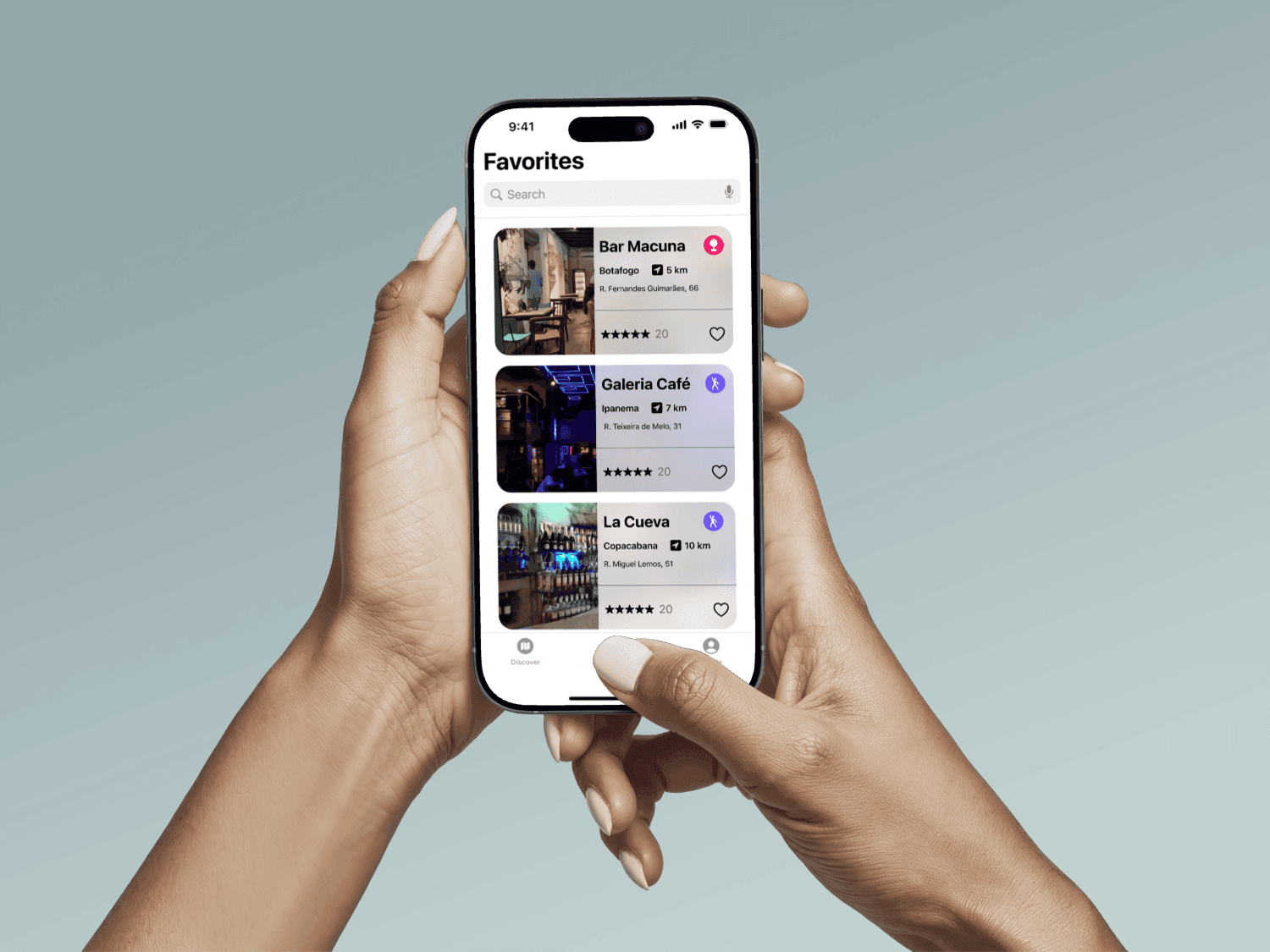
Information Architecture & Prioritization – Supported MoSCoW analysis to balance essential features (search, filters, ratings) and complementary ones (favorites, map view).
Prototyping & Visual Design – Created mid- and high-fidelity prototypes in Figma, emphasizing simplicity, inclusivity, and consistency in all visual elements.
Feedback System Design – Designed the six-category rating model to streamline reviews and capture meaningful insights from users.
Goals
Provide a safe and accessible way for LGBTQ+ users to explore Rio de Janeiro.
Simplify the process of sharing experiences through an intuitive review system.
Build a clean, cohesive, and trustworthy visual identity.
Encourage community-based collaboration and visibility for inclusive spaces.
Impact
Glink strengthened awareness around inclusive tourism in Rio and offered a design model focused on accessibility, representation, and emotional safety.
The structured review system and the app’s clear interface encouraged participation while reducing friction in giving feedback.
Early user tests showed strong positive reactions to the app’s simplicity and tone — users felt the platform was not only functional but also genuinely welcoming.
What I’ve Learned
Through Glink, I learned how early exploratory research can guide a project’s direction even before defining a clear problem space.
It also reinforced the importance of inclusive design — not only in representation but in emotional experience and usability.
Balancing functional clarity with empathy became essential to create a product that users could both trust and identify with.
Glink is available on the App Store!