AR Strike
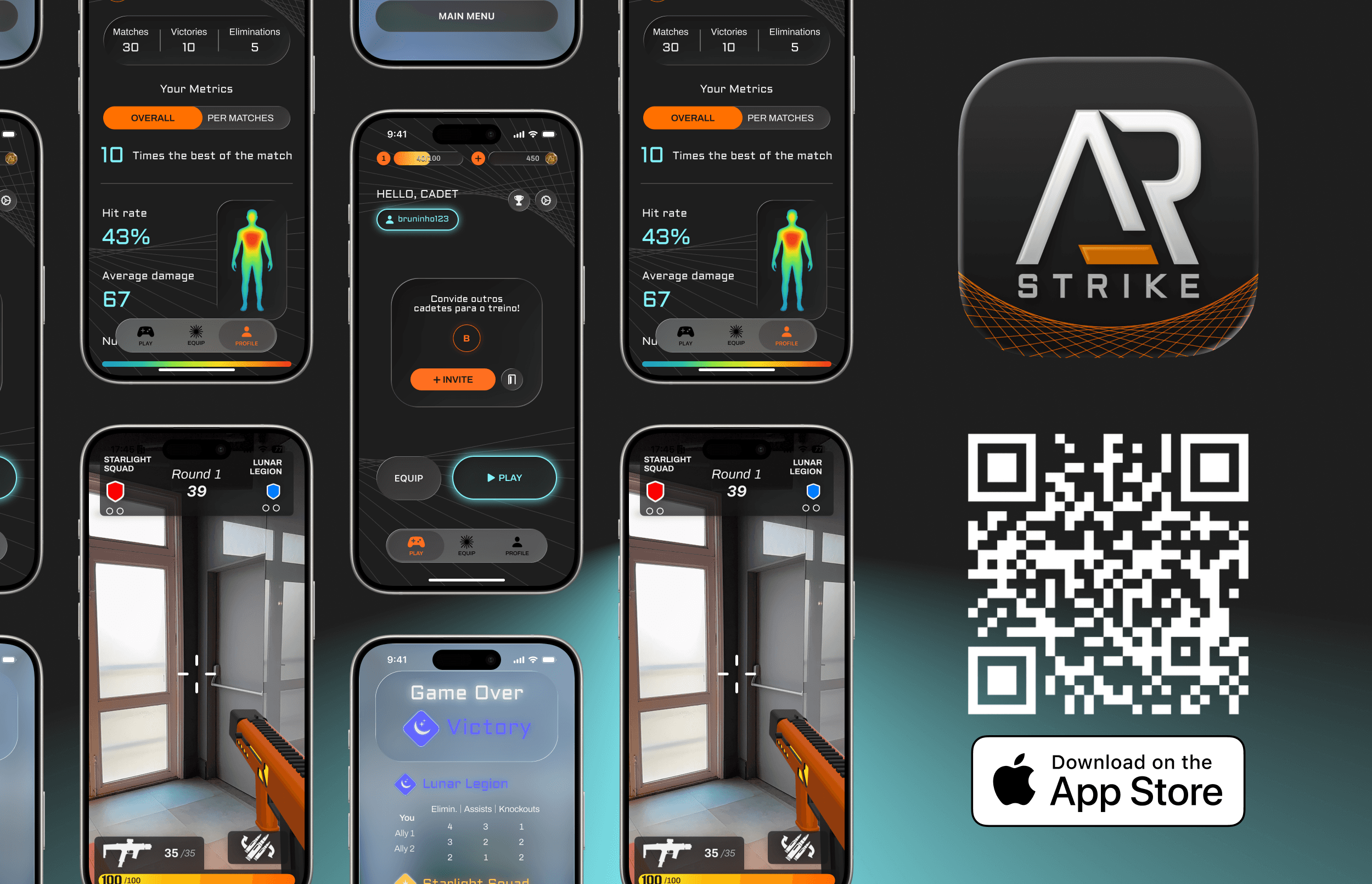
AR Strike is a multiplayer augmented reality laser tag game that turns any space into an active playground. Players run, hide, and tag opponents with lasers in fun matches that promote movement and social connection.
UX Research
UI Design
Design System

Project Overview
AR Strike is a multiplayer augmented reality laser tag FPS designed to bring people together through movement and play. Players must dodge energy blasts, aim, and score points in fast-paced matches that can be played anywhere — turning real spaces into futuristic training arenas.
Set in a sci-fi narrative where players are space cadets in training, AR Strike invites users to step into an intergalactic academy and embark on missions that merge digital gameplay with real-world action. The game bridges the gap between physical and virtual worlds, promoting social connection and physical activity through immersive design.
My Role
As the UX and UI Designer, I was responsible for:
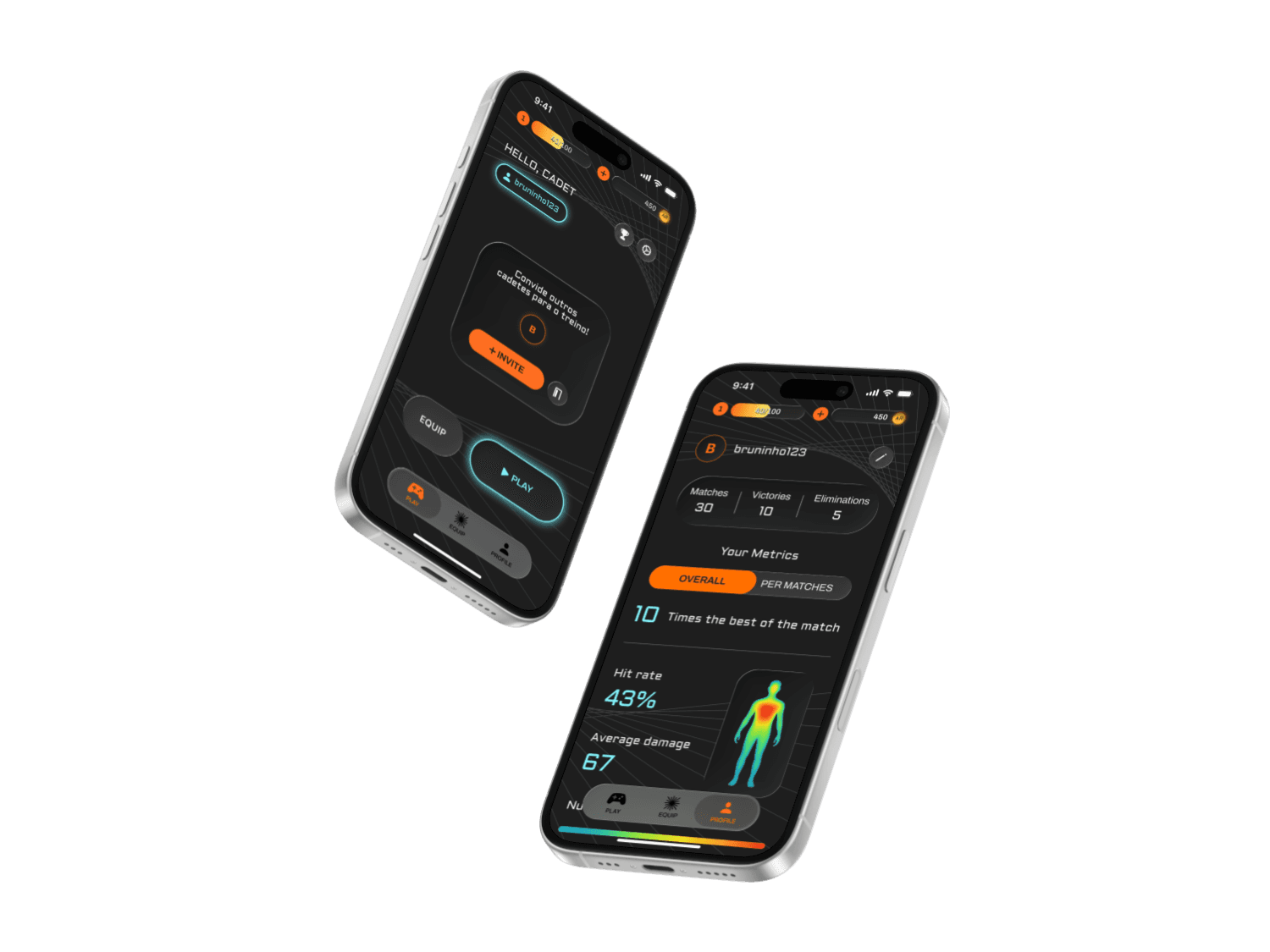
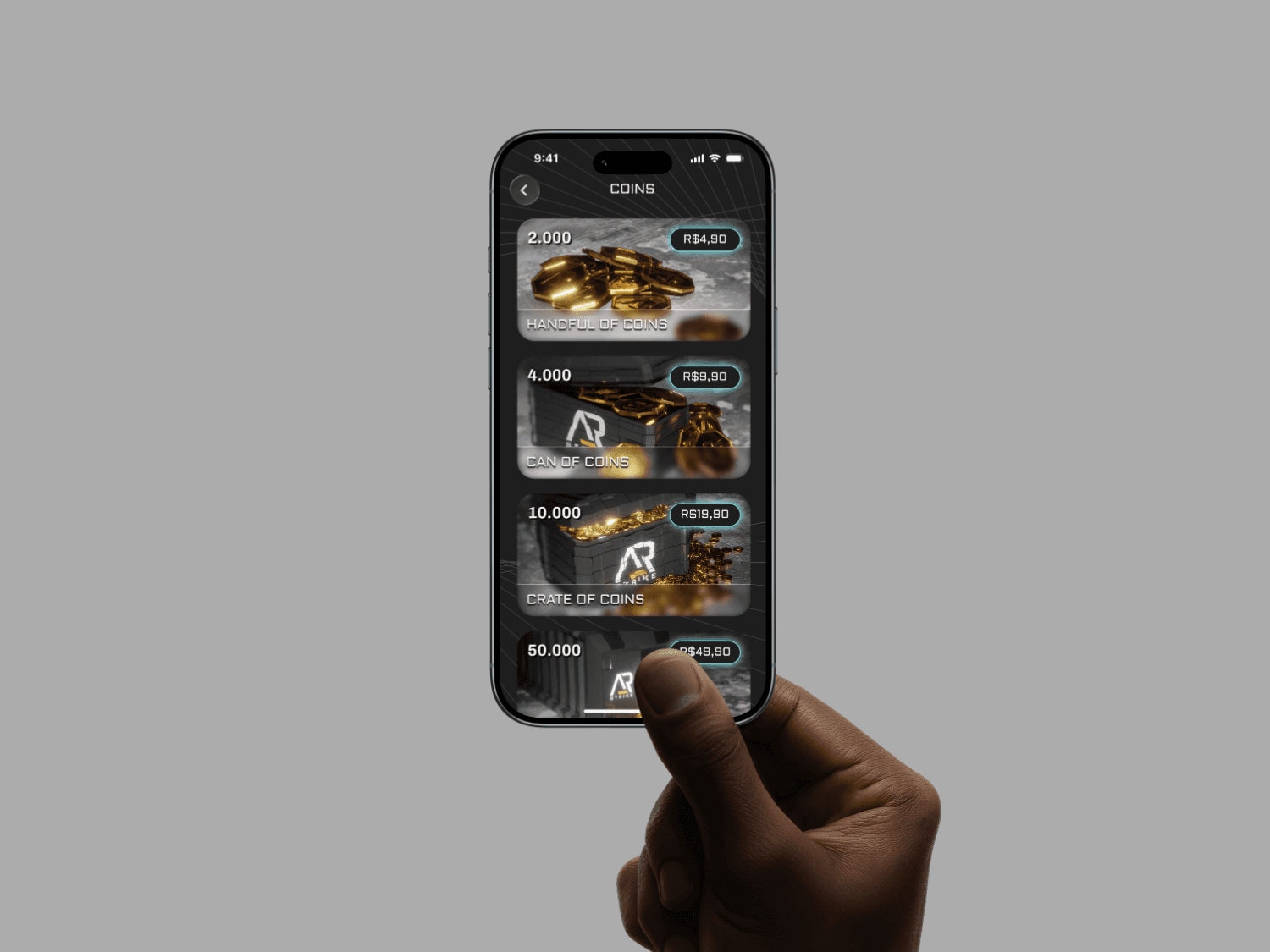
Prototyping the main menu screens and redesigning the in-game interface, maintaining consistency and clarity across all visual elements.
Developing a large portion of the Design System, defining button hierarchies, interaction colors, and states based on their importance and function.
Creating a visual and linguistic consistency aligned with the sci-fi narrative — ensuring that each interface element, label, and interaction reinforced the identity of being a space cadet in training.
Balancing clarity and immersion: visuals and text were carefully crafted to guide players while sustaining narrative depth.
Problem
Traditional online games connect people through voice and text, but rarely replicate the feeling of being together in the same space. These experiences are entirely virtual, offering limited physical engagement and real-world connection.
Opportunity
With the rise of spatial computing and augmented reality technologies, there is growing potential for games that promote physical activity while keeping the same level of immersion and excitement as digital play. AR Strike embraces this hybrid space — turning movement into part of the gameplay itself.
User Journey
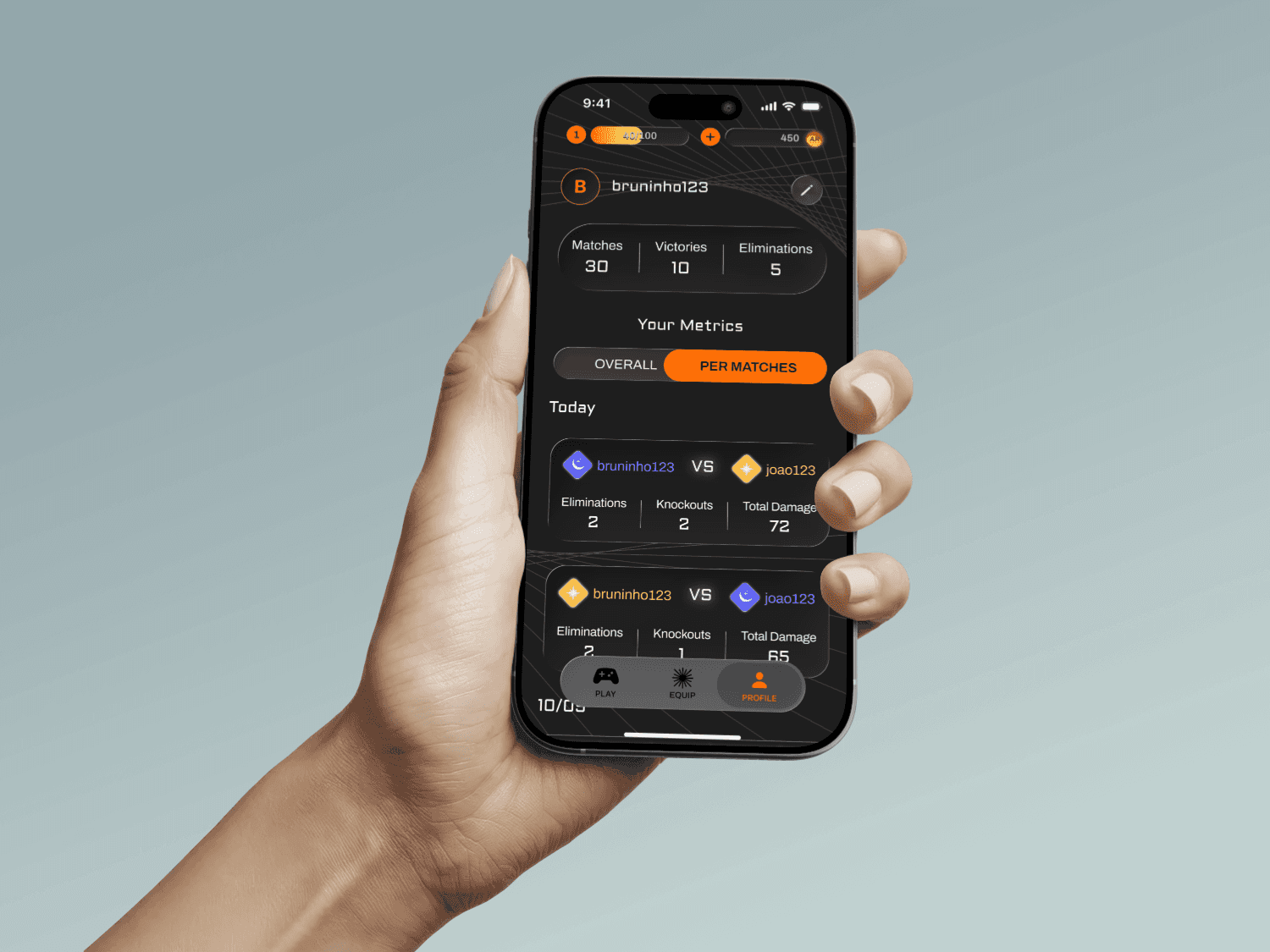
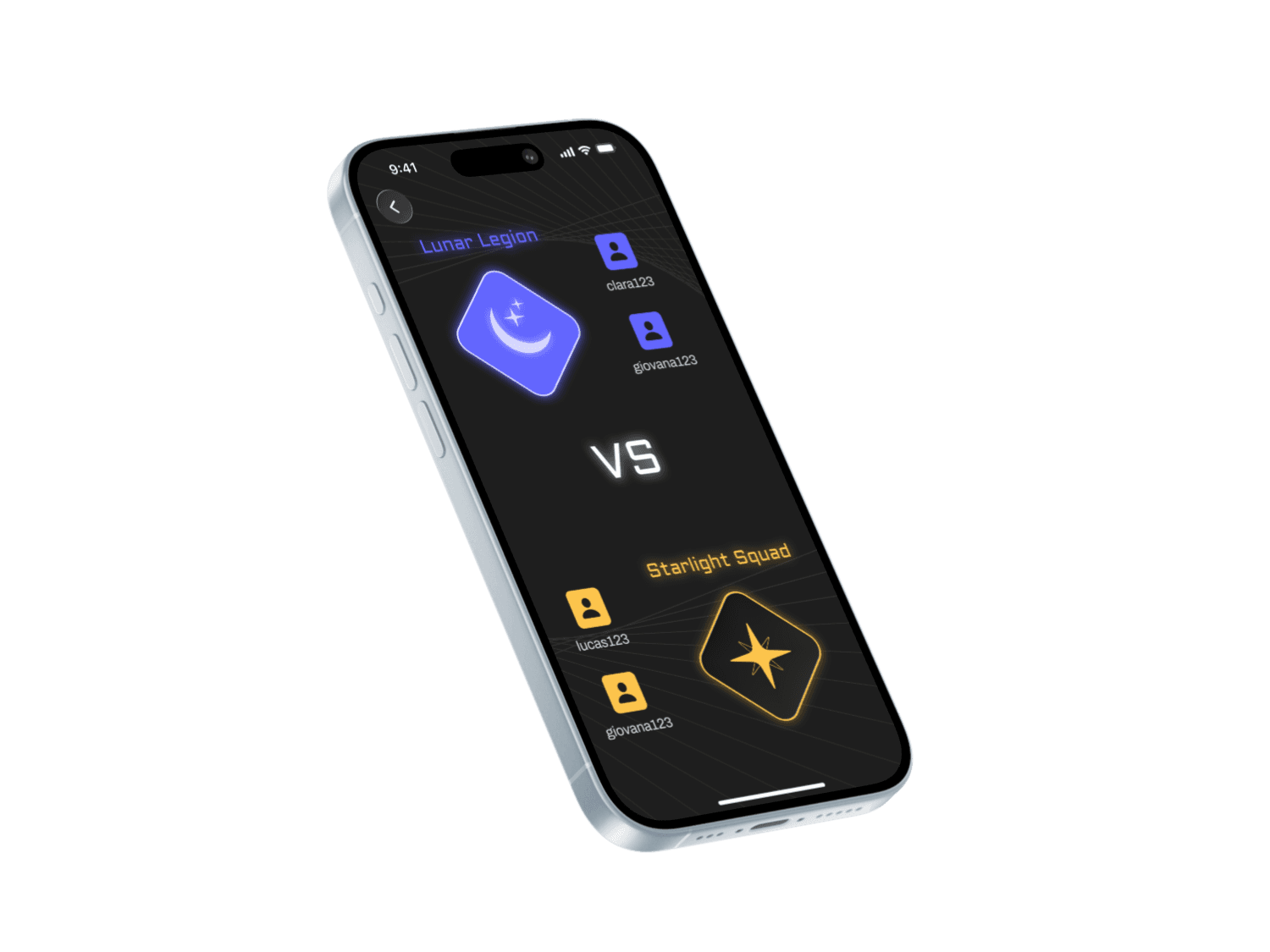
In AR Strike, players take the role of cadets preparing for intergalactic missions. They invite friends to local matches, where teams compete using laser training tools to disable opponents temporarily and win rounds.
Each match is short, intense, and local — promoting movement, strategy, and teamwork. Players run, dodge, and use the environment tactically to win. Beyond competition, the experience fosters connection, collaboration, and healthy activity.
My Approach
Research & Benchmarking – Analyzed popular AR and mobile multiplayer games to identify usability standards and interface trends in spatial experiences.
Prototyping & Iteration – Created mid- and high-fidelity prototypes in Figma, focusing on intuitive layouts and readability under different lighting conditions (indoor/outdoor).
Narrative Alignment – Incorporated the “space cadet” storyline into interface copy and iconography to strengthen immersion.
Consistency & Accessibility – Built a scalable design system with color contrast validation and icon standardization, ensuring a unified experience.
Goals
Encourage physical activity through engaging, movement-based gameplay.
Create an experience that connects players in the same physical space.
Ensure a clear and consistent interface that communicates actions effectively.
Support the narrative identity of the game through UI and UX design choices.
Impact
Our first public tournament took place during Expo ECOA at PUC-Rio. Dozens of players participated, and we collected usability feedback and gameplay data. The event proved that AR Strike encourages social interaction and physical engagement in gaming environments.
Results:
500+ downloads on the App Store
10,000+ impressions
Early adopters in Brazil, the U.S., and China
What I’ve Learned
In AR Strike, I learned the importance of offering feedback through multiple sensory channels — visual, auditory, and haptic. Because players are physically moving in unpredictable real-world environments, relying solely on visuals isn’t enough.
Integrating sound and vibration cues became essential to notify players of different actions and consequences — whether they’ve scored, been hit, or activated a power-up. This multi-sensory approach not only improves player awareness but also makes the experience more immersive and accessible, reinforcing trust between the player and the system.
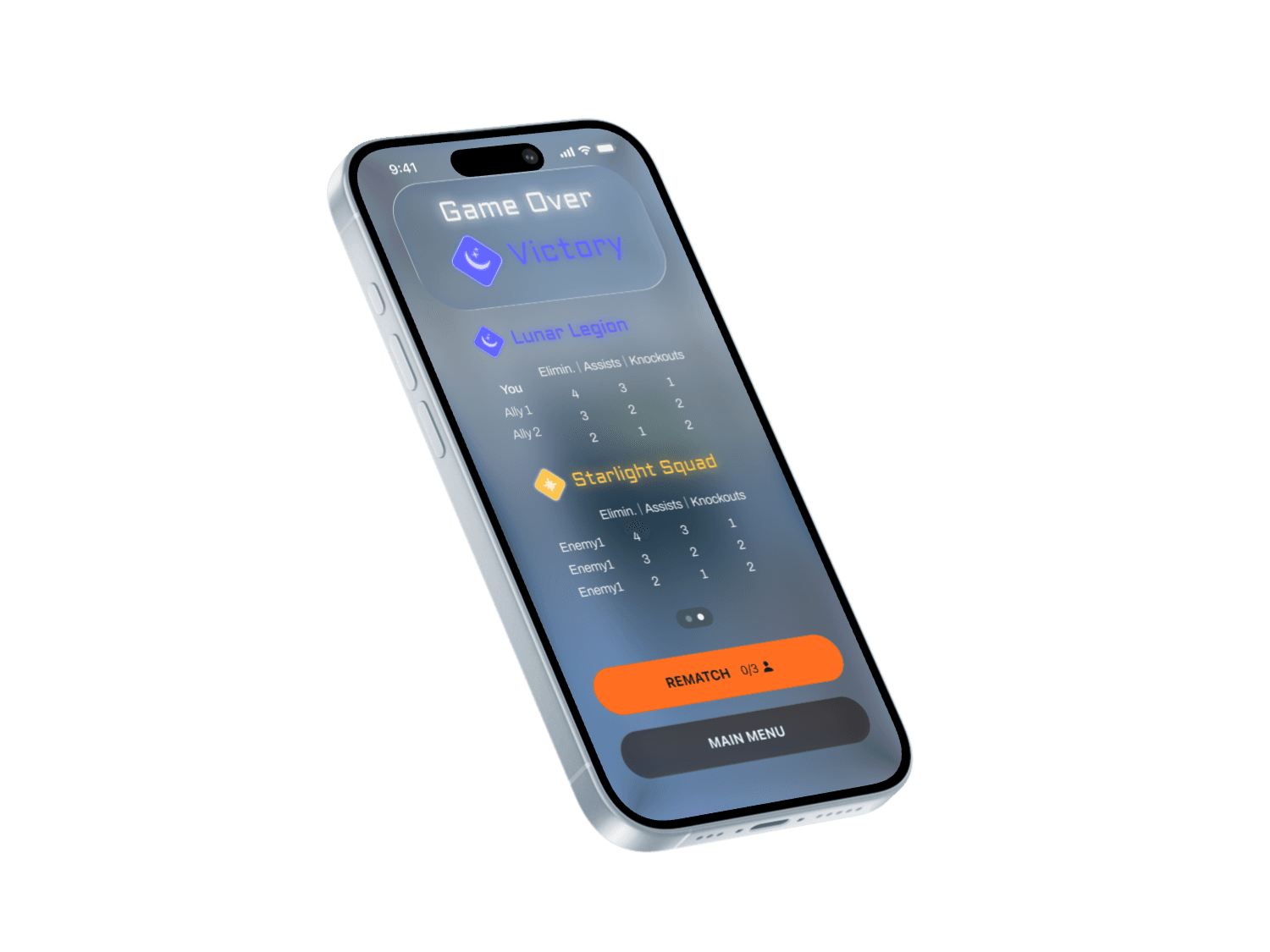
AR Strike is available on the App Store for download :)